
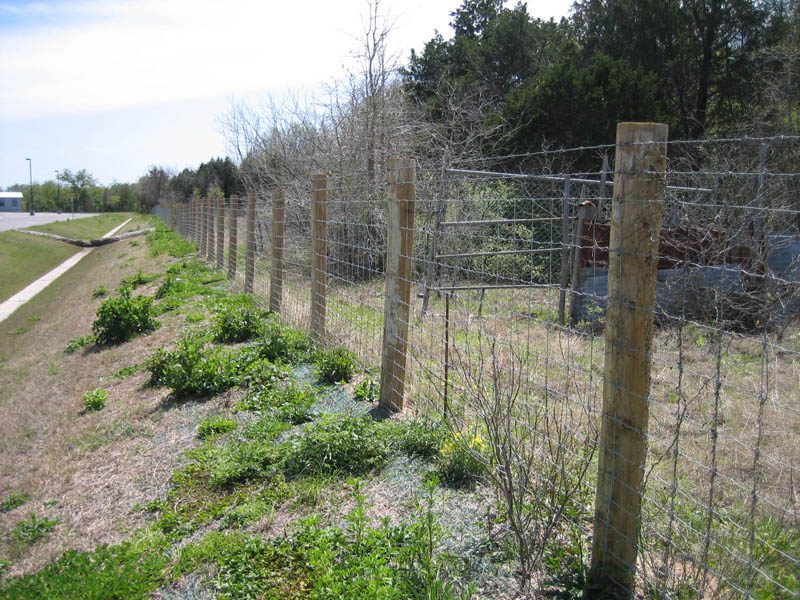
You invest time, money and pride into your ranch. You need to protect your investment with a quality fence that will withstand natural elements and potential damage from animals (both your own and unwanted outsiders). While there are many fencing solutions available on the market today, there are only a few that will qualify as quality ranch fences.
When considering a fence for your ranch, you will want to ensure that it will be durable, affordable to secure such a wide expanse of space and of course, and attractive enough to complement the natural beauty of your ranch.
With so many fencing options available, it can be overwhelming to choose the perfect one. In this post we’ve taken the guesswork out for you; read on to discover some of our favorite fencing choices for ranches!
Ranch Fencing Considerations
Livestock Control
We need to make sure our fencing keeps livestock in. This is crucial to prevent animals from getting out or getting hurt.
Key points to consider:
- Height and strength: Fencing must be tall and strong enough to stop bigger animals.
- Material: Wood, vinyl, and wire have pros and cons. Vinyl is durable, and wood is traditional.
Property Lines
Clear property lines are key to avoiding disputes with neighbors. We want fencing that’s easy to see and marks our land.
Factors to consider:
- Local laws and regulations: Check local laws on fence height and material.
- Types of fencing: Ranch rail and picket fences can be good markers for our rural landscape.
- Maintenance: Choose materials that require little upkeep so our boundaries are evident all year.
Looks
Our fencing can add to the overall look of our property. We need to balance function with form.
Think about these:
- Material: Wooden fences are rustic, and vinyl and metal fences are modern.
- Color scheme: Choose colors that match our house and landscape.
- Design continuity: Our fencing should match our buildings and ranch style.
Safety
We need to keep our livestock and people safe on our property. So, we need to choose fencing that minimizes risk.
Safety considerations:
- Material: Smooth wire or wood prevents animal injuries and reduces child hazards.
- Maintenance: Regular checks and repairs prevent accidents and keep it safe.
- Visibility: Fencing should be visible enough to warn animals and people of boundaries, and markers or reflective material should be used if needed.
Materials
Wood
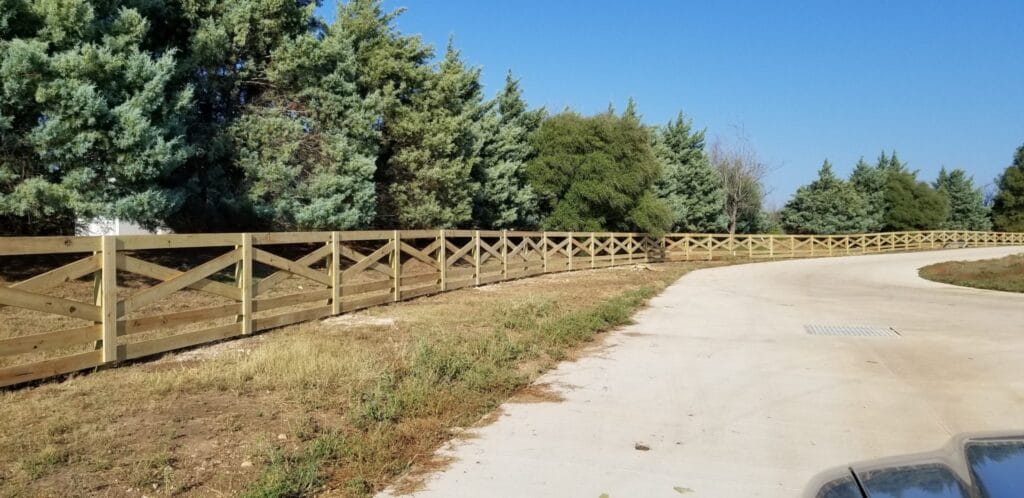
Wood is a traditional choice for ranch fencing. Its natural look complements our rural landscape. Different types of wood can be used, such as cedar, pine, and redwood. Cedar is popular because it resists decay and insects.
Pros:
- It is timeless and looks good with the landscape.
- Eco-friendly if using sustainably sourced wood.
Cons:
- Regular maintenance, painting, staining, and checking for rot or warping are required.
Types:
- Post and Rail: For more considerable livestock and property lines.
- Split Rail: Rustic look for traditional ranches.
- Board Fencing: Secure for horses and polished look.
Metal
Metal fencing, such as steel and aluminum, is durable. It can withstand weather and is more secure than other materials.
Pros:
- Very durable and low maintenance, long term.
- Good for high security and predator control.
Cons:
- Higher upfront cost than wood or vinyl.
- May not be as aesthetically pleasing for some owners.
Types:
- Barbed Wire: Cost-effective and commonly used for cattle containment.
- High-Tensile Wire: Strong and flexible for big pastures.
- Welded Wire: For small livestock and predator resistance.
- Chain-Link: Durable and secure, used for smaller enclosures.
Vinyl
Vinyl fencing is becoming popular because it is low-maintenance and versatile. It doesn’t need painting or staining, making it a good choice for many ranchers.
Pros:
- Low maintenance and weather resistant, but looks good over time.
- Available in different styles to match ranch style.
Cons:
- More expensive than wood.
- Not as strong as metal or heavy-duty wood fencing.
The Best Types of Ranch Fencing
High-Tensile Wire Fence
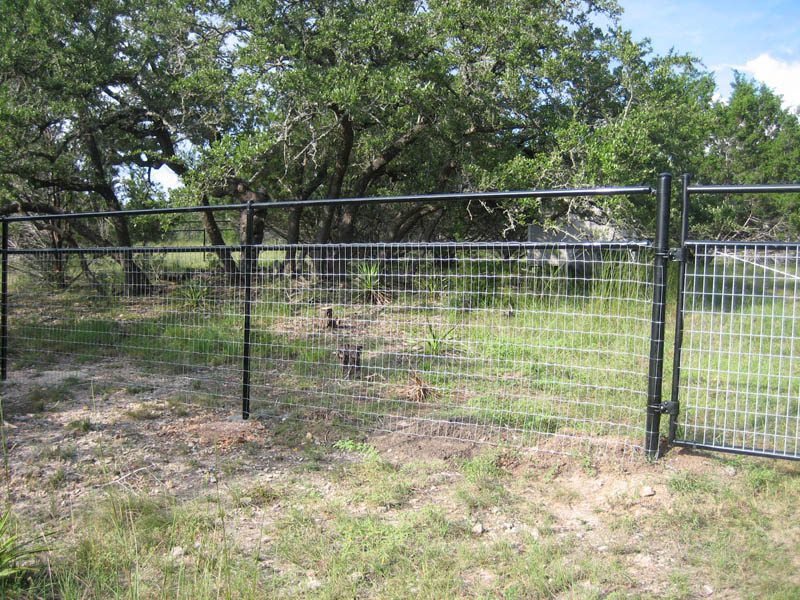
High-tensile wire fencing is durable and cost-effective. It is designed to withstand heavy pressure and is perfect for holding large animals like cattle.
It’s usually a series of strands stretched between posts. This design keeps livestock in and resistant to sagging and breaking.
We can use barbed or smooth wire. Barbed wire deters animals from pushing against the fence, while smooth wire is safe for horses. High-tensile wire fencing is popular for its longevity and low maintenance.
Post and Rail
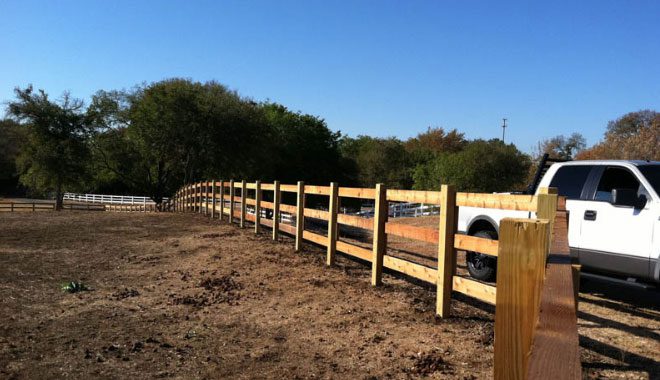
Post and rail fencing is traditional and functional. This style has wooden posts with horizontal rails.
We can choose two, three, or four rails depending on how secure we need the fence to be. The wood gives the wall a rustic look that fits our ranch landscape.
Cedarwood is used because it is naturally rot-resistant. Post-rail fencing involves digging and setting post holes with concrete for stability. We like its simplicity and effectiveness for containing livestock.
Vinyl Fence
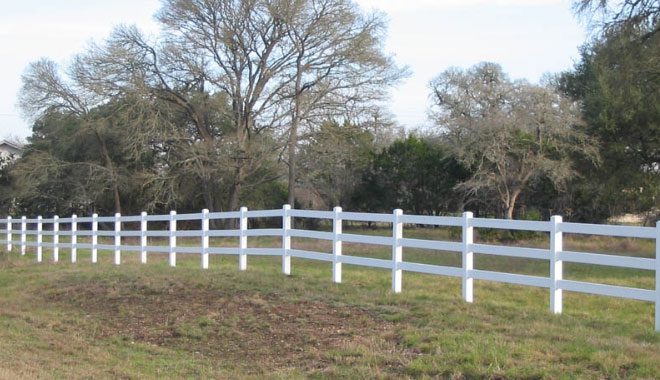
Vinyl fencing is a modern option that’s low-maintenance and durable. Unlike wood, vinyl doesn’t rot, splinter, or need painting, and it’s very user-friendly.
Vinyl fences come in different styles, including privacy and rail. They can look like wood, look good, and withstand the weather more brutally.
Installation involves setting vinyl posts into concrete-like wooden fences. This type is also available in different colors so we can match it to our property’s style.
Woven Wire Fence
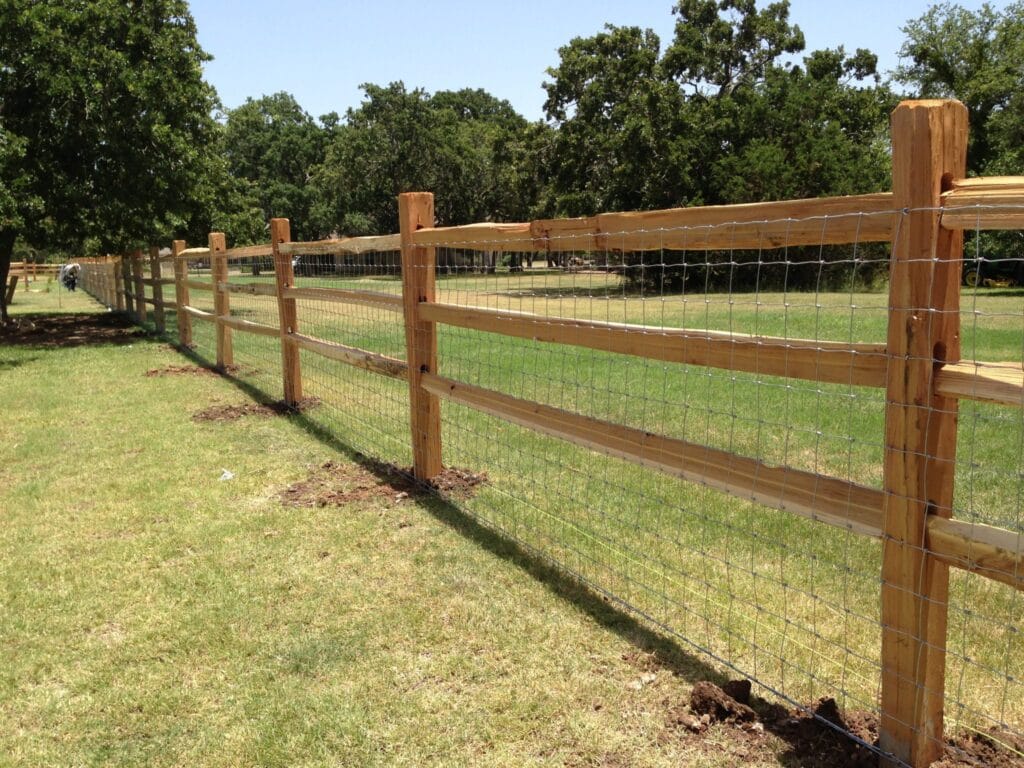
Woven wire fencing consists of vertical and horizontal wires woven together to form a grid. This design creates a strong barrier suitable for smaller livestock, such as sheep or goats.
Woven wire fences come in different heights and mesh sizes so that we can choose the best one for our needs. They flex under pressure, so they can give a little without breaking if an animal pushes against them.
The installation requires sturdy posts to keep the woven wire taut. We like its strength and versatility across different ranch environments.
Barbed Wire Fence
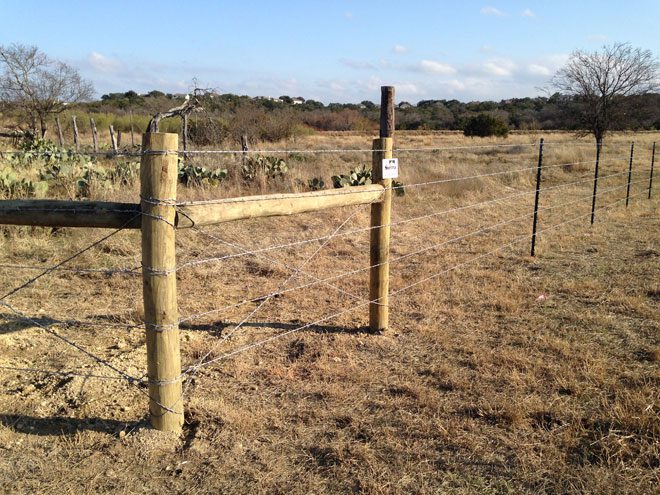
Barbed wire fencing is among the most cost-effective fencing options for ranchers. It’s popular for containing livestock and deterring intruders.
This type of fence has wire strands twisted with barbs at regular intervals. We usually install 3 to 5 strands depending on our containment needs.
While it’s suitable for cattle and big animals, we must be careful with horses; they can get hurt by barbed wire. Installation is simple; wooden or metal posts support the wire strands.
Cedar Split Rail
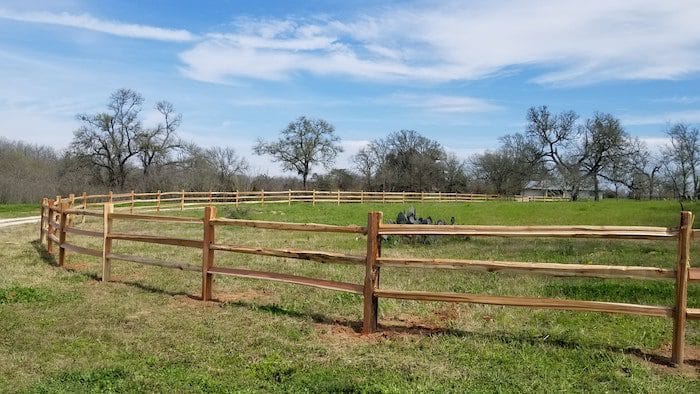
When people think of fencing on Texas ranches, they think of cedar split rail fences. While cedar split rail fences can be used in any fencing situation, their rustic look fits perfectly on a ranch. This fencing type can be used throughout the perimeter of the property, or as enclosures for cattle, horses and pets.
Cedar wood is extremely durable, however, it’s most notable quality is wearability. As cedar ages, it continues to hold up against animals and weather conditions. If you’re concerned about the gaps in between the rails, we can add woven wire along the fence to contain or restrain smaller animals.
Horse Rail
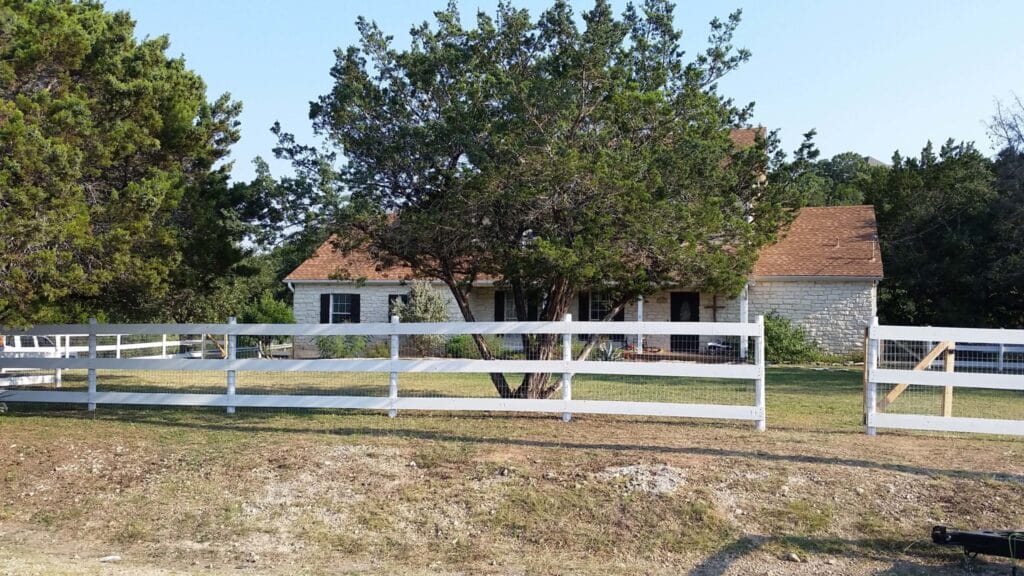
In case it wasn’t clear, horse rail fences are a perfect solution for horses. This is a newer fence design that looks similar to cedar split rail fences, but instead of using split cedar, it uses vinyl or dimensional lumber. To create the horse rail fencing, we take 5-inch wide vinyl that is stretched between wires, which gives it an appearance of wood. The vinyl is then installed in a similar fashion to a cedar split rail or a board fence, with gaps in between the rails.
Because horse rail fences take advantage of vinyl, this fencing choice is very low maintenance. Vinyl rarely requires repairs because of its durability and longevity.
Although vinyl horse rail is very low maintenance and rarely requires repairs it is more of an aesthetic solution rather than effective. Horses can be very rough on a fence in which case you may opt for the sturdier lumber choice.
Cattle Panels
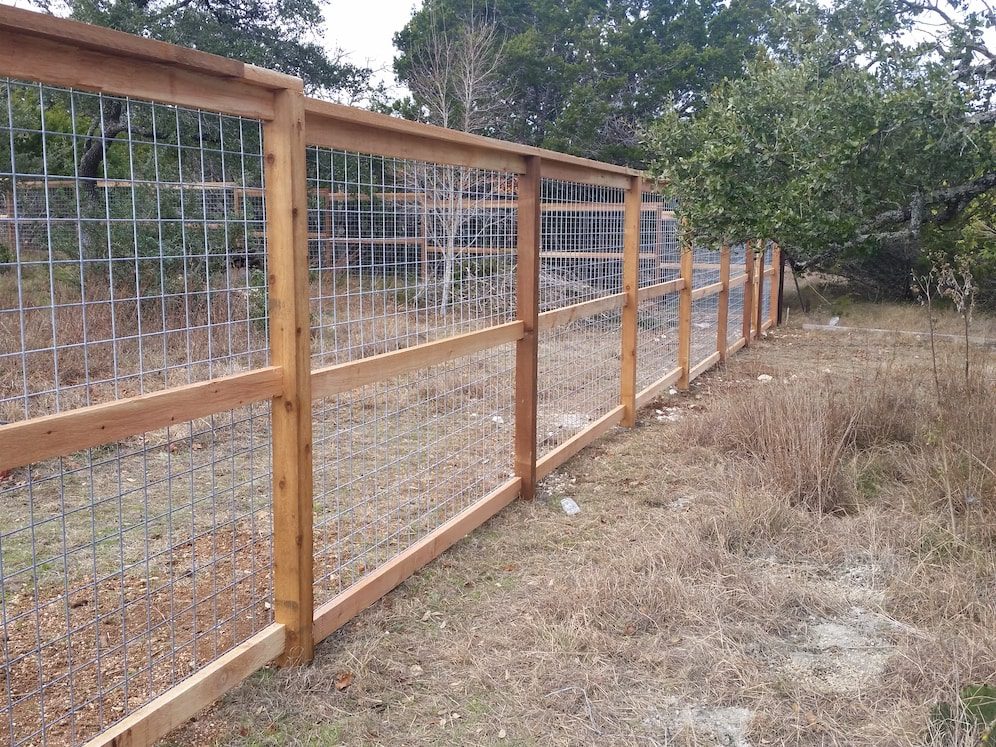
Cattle panels are typically used as livestock enclosures, but we have installed them around property perimeters as well. We install this fencing type by taking galvanized square panels and frame them in western red cedar. The panels give the fence an industrial look, while the cedar brings the rustic charm a ranch needs. This creates the perfect balance to bring to your property.
What To Consider When Choosing Ranch Fencing
Livestock
Different types of livestock require different fencing solutions. For example, cattle, horses, and sheep have other needs that affect their choices.
- Cattle are less likely to challenge a strong fence. Barbed wire may be enough, but we can also consider high-tensile wire for durability.
- Horses need a fence that discourages escape. Smooth wire, vinyl, or wood fencing works well to prevent injury.
- Sheep are great escape artists. To keep them contained, their fencing must be close to the ground. Stock fencing or woven wire are usually good choices.
Terrain
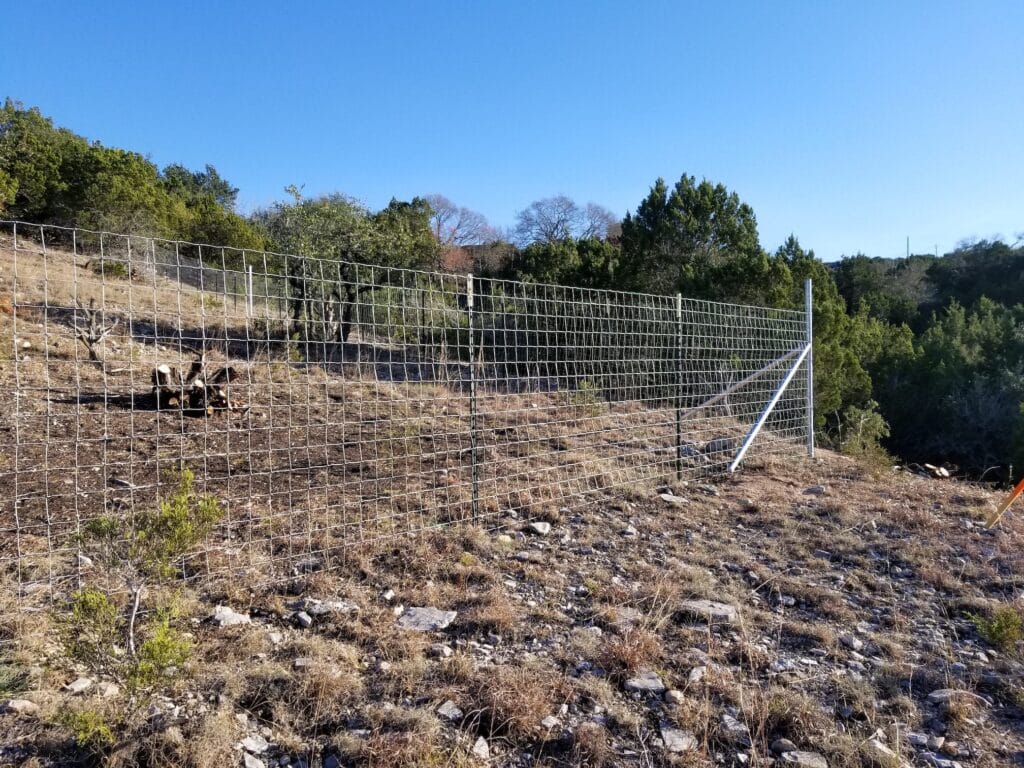
The terrain of our property will affect our fence choice.
- Flat land means a more straightforward fence design.
- Hilly or uneven terrain requires custom solutions and more materials.
- Rocky soil makes post-hole digging difficult.
- Lighter fence materials or concrete posts are recommended.
Budget
Budget is a significant factor in our fencing choices.
- Wire, wood, or vinyl options are available at different prices.
- Installation cost: DIY may be more expensive than hiring pros.
- Maintenance cost: Some materials require more upkeep than others.
Security Needs
Our fence must meet our security requirements.
- High-security areas require more substantial materials like barbed wire or electric fences.
- Stock fencing is general protection for livestock and property.
- Visibility of the fence is essential to alert unwanted visitors.
Aesthetics
The fence’s appearance contributes to the overall look of our ranch.
- Material: Wood is classic, and vinyl is modern.
- Color: Choosing a color that matches our home or buildings will make it look cohesive
- Design: Rail fences or post-and-rail design can add charm while still functional.
Maintenance Tips
Regular Inspections
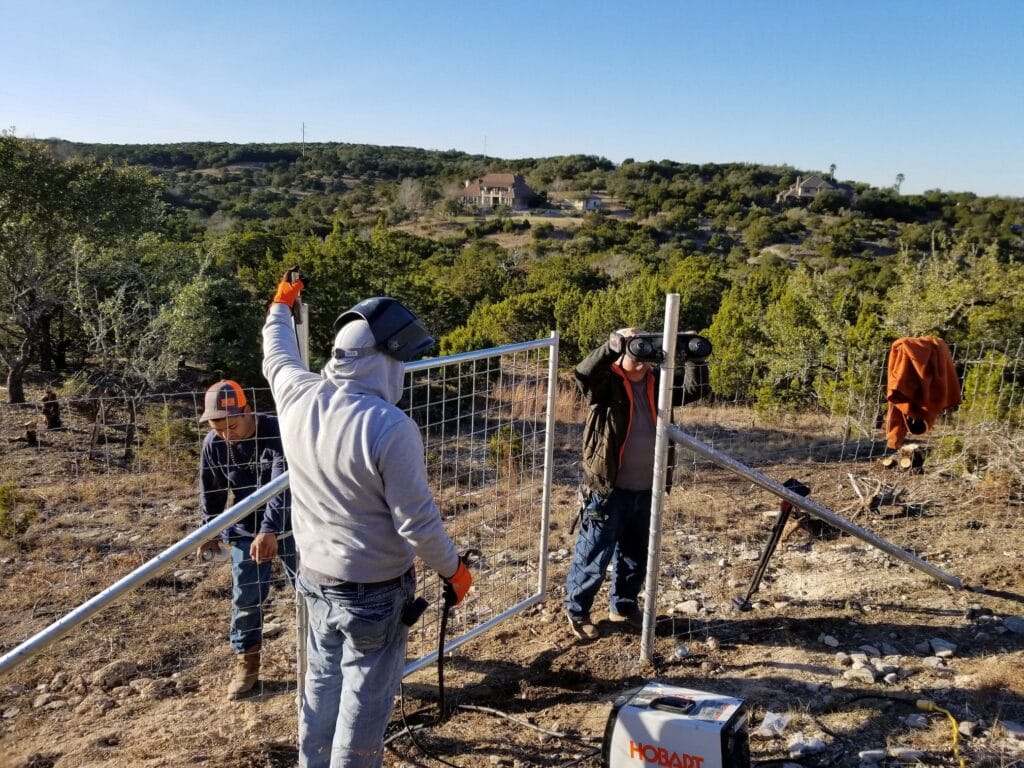
We must inspect our fence regularly. We should check for signs of wear, such as rusted wires, broken posts, and loose hinges. We should also inspect fence sections for sagging or leaning to identify damage early. We should do these checks at least twice yearly, especially after severe weather.
Weed Control
We need to control weeds around our fence. Overgrown weeds can press against the wall and cause damage. We should maintain a 3-foot clearance around the fence line. Regular trimming or mowing can prevent weeds from becoming a problem.
Tensioning
Proper wire tensioning is essential to maintaining fence integrity. Loose wires can sag, weaken the fence, and encourage animals to break through. To prevent these problems, we should check and adjust barbed or smooth wire fences every few months.
Post Replacement
To keep the fence strong, we must replace damaged or rotten posts during our regular checks. We should inspect each post and determine if it needs replacing. If a post is leaning or soft, it’s time for a new one.
When replacing posts, use treated wood or weather-resistant metal. Set the new post in concrete if the soil is sandy or loose.
Ready to Build A New Fence For Your Ranch? Let Us Help You Choose
Fencing can be overwhelming with the variety of options available on the market today, but hopefully this blog post has given you a better idea of fences you should include on your ranch. If you’re ready to get your project started, or want to ask a few more questions, give us a call today!